

Rise of Self-Driving Workflows
How Autonomous AI Agents Are Changing the Future of Work
By ProBits Team | 8–10 min read
Report Access Form
Rise of Self-Driving Workflows: How Autonomous AI Agents Are Changing the Future of Work
Imagine a workplace where your email writes itself, your reports generate automatically, and your calendar adapts in real time — all without a human lifting a finger.
We’re on the cusp of a radical shift in how work gets done. Autonomous AI agents powered by large language models, memory, and tool use are transforming digital workspaces from reactive assistants into proactive, goal-seeking collaborators.
These agents can receive instructions, break them down, search data, perform analysis, write summaries, and even email results — without a human nudging them every step of the way.
From drug discovery labs to business analytics teams, autonomous agents are already delivering faster, cheaper, and more intelligent outcomes. And this is just the beginning.
By 2035, entire business functions may be orchestrated by interconnected AI agents, fundamentally changing how decisions are made and how value is created.
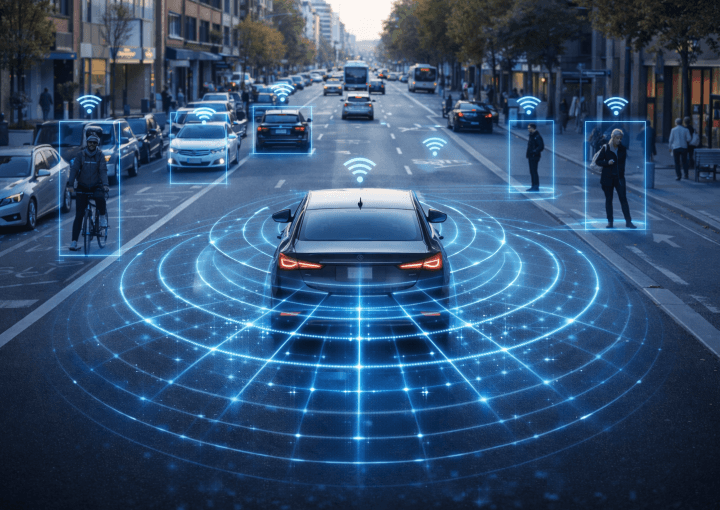
Autonomous AI agents — powered by large language models and decision-making capabilities — represent a new era of self-driving workflows. Much like self-driving cars navigating traffic, these intelligent systems navigate digital environments by setting goals, breaking down tasks, executing plans, and learning from errors without step-by-step instructions.
But with great power comes great responsibility. Ethical questions, security vulnerabilities, and governance gaps loom large. The challenge is not purely technical — it’s deeply human.
How do we build systems that elevate human potential without losing control?
This paper offers a deep dive into the what, why, and how of self-driving workflows — from technology fundamentals to future forecasts. For leaders and strategists, it’s a call not just to watch the wave, but to ride it with clarity, caution, and ambition.
Not Just Smarter Software — But a Whole New Kind of Colleague
“It doesn’t just follow instructions — it makes its own.”
Most people are familiar with digital assistants like Alexa or Google Assistant, or with chatbots that answer customer questions. These tools are useful, but fundamentally reactive — they wait for prompts.
Autonomous AI agents, by contrast, are proactive. They are designed not just to respond, but to pursue goals.
For example, when given a high-level instruction such as:
“Create a monthly sales report.”
An autonomous agent may independently:
- Search internal databases
- Run statistical analysis
- Write a narrative summary
- Distribute the report to stakeholders
All without further human intervention.
Wang et al. (2024) describe these systems as “human-level autonomous systems” due to their ability to reason, self-organize tasks, and act effectively in dynamic environments.
This capability — translating high-level intent into multi-step execution — is what fundamentally separates autonomous agents from traditional automation.