

HyperAutomation & AIOps
Machines that Fix Themselves
By ProBits Team | 8–10 min read
Report Access Form
Introduction
“What if your IT systems could detect failures before they happened, automatically patch themselves, and continuously learn from every incident?”
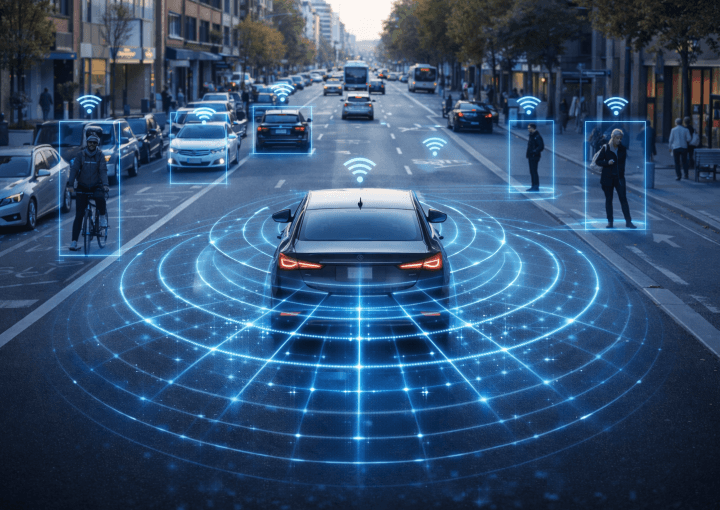
What once sounded like science fiction is rapidly becoming reality, driven by hyper-automation and AIOps (Artificial Intelligence for IT Operations). In a world where digital infrastructure forms the backbone of every organization—from global banks and telecom giants to small e-commerce startups—the demand for self-healing and adaptive systems is no longer optional, but essential.
AIOps refers to a software-driven approach that leverages artificial intelligence and machine learning to enhance and automate IT operations. Its primary objectives are to automate routine operational tasks, improve decision-making, and proactively identify, resolve, or even prevent IT issues—thereby improving the overall efficiency, reliability, and resilience of IT environments.
Historically, enterprises have progressed through successive waves of automation. During the 1990s, simple scripting techniques helped reduce manual IT workloads. The 2000s introduced workflow automation platforms that scaled automation across business functions. The 2010s saw the rise of Robotic Process Automation (RPA), which replicated repetitive human tasks. However, each stage had limitations: operational silos persisted, human oversight was required for exceptions, and IT operations often struggled to keep pace with business demands.
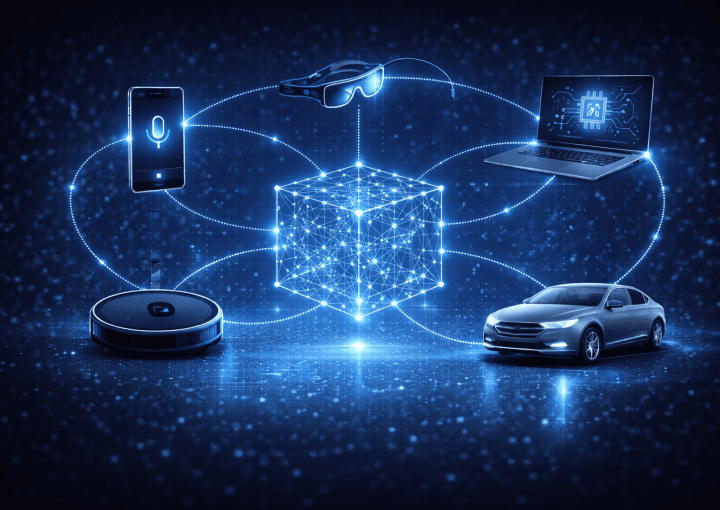
Hyper-automation emerged as a strategic response to these challenges. Coined by Gartner in 2019, the term describes the coordinated use of multiple automation technologies—including RPA, AI, machine learning (ML), natural language processing (NLP), process mining, and digital twins—to automate complex, end-to-end processes (Gartner, 2023). Unlike traditional automation, hyper-automation focuses not on isolated tasks but on building enterprise-wide automation ecosystems.
At the same time, AIOps addresses a critical gap in IT operations. Modern IT environments generate enormous volumes of logs, alerts, and performance metrics—far beyond human capacity to analyze effectively. AIOps platforms such as Dynatrace, Moogsoft, and Splunk process these signals at scale, applying machine learning to detect anomalies, correlate events, and trigger automated remediation with minimal or no human intervention (Forrester, 2023).
Together, hyper-automation and AIOps enable the vision of the self-healing enterprise—an organization in which systems do not merely execute instructions, but continuously monitor, optimize, and repair themselves.
For India, this transformation is particularly significant. As Digital Public Infrastructure (DPI) drives financial inclusion, healthcare digitization, and e-governance, hyper-automation offers a scalable way to deliver services without proportionally increasing human costs. At the same time, leading Indian IT firms such as Infosys, Wipro, and HCL are exporting AIOps platforms globally, positioning India not only as a consumer but as a global innovation hub for automation technologies.
The critical question facing industries today is no longer, “Can machines replace repetitive human work?” Instead, it is: “How much autonomy should machines be allowed, and what role will humans play when systems can detect and fix problems before we even notice them?”