

Autonomous Mobility and V2X Ecosystem
Connected Road, Self Driving Fleets
By ProBits Team | 8–10 min read
Report Access Form
Introduction
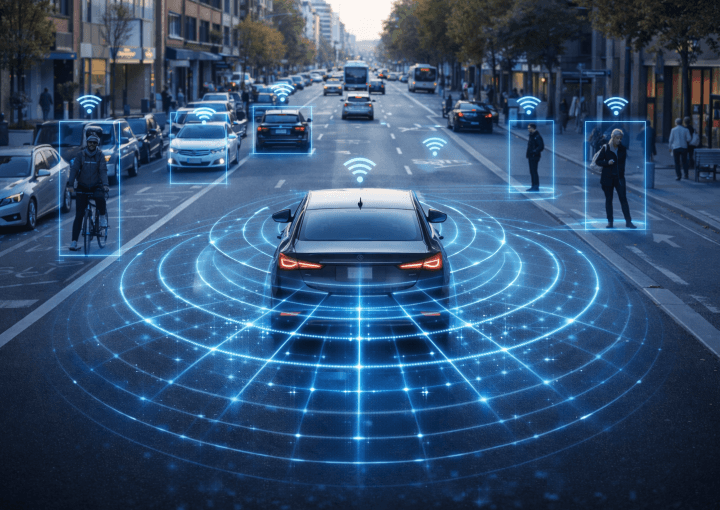
Imagine stepping onto a city street in 2035. Cars glide past without drivers, buses arrive on schedule without a steering wheel, and delivery drones hover between traffic lights that seem to “know” when to turn green. Roads are no longer chaotic veins of congestion but intelligent networks where vehicles, people, and infrastructure continuously communicate. This is the vision of autonomous mobility and the V2X (Vehicle-to-Everything) ecosystem — a world where transport is not just automated, but connected, cooperative, and context-aware.
We are already seeing its pieces come alive. Automated trains in metros such as Delhi and Singapore operate safely without human drivers. Autonomous shuttles are ferrying students across campuses like IIT Hyderabad, logging thousands of real-world rides. Ride-hailing companies are testing driverless taxis in Phoenix, Beijing, and soon, Bengaluru. At the same time, roadside units, satellites, and 5G towers are being woven into a digital fabric that allows vehicles to communicate with one another, with pedestrians’ smartphones, with traffic signals, and even with the electric grid.
This evolution goes far beyond cars driving themselves. It represents connected roads that anticipate traffic flows, reroute vehicles before congestion builds, and protect pedestrians from unseen dangers. It includes self-driving fleets that move goods across states with fewer accidents and lower fuel consumption. At its core is the convergence of artificial intelligence, advanced sensors, and ultra-fast networks to create a safer, cleaner, and more efficient mobility ecosystem.
For India, this future holds particular promise. With some of the world’s highest road fatalities, heavily congested highways, and rapidly growing logistics demands, the stakes are immense. Yet the opportunities are equally significant — autonomous buses easing urban traffic, connected ambulances navigating congestion in real time, and AI-guided freight corridors boosting efficiency on routes such as Delhi–Mumbai. While global pioneers in the United States, Europe, China, and Japan are demonstrating what is possible, India’s strong technology ecosystem and scale of mobility needs uniquely position it to leapfrog into an era of connected autonomy.
As we explore this landscape further, we will examine the technologies, opportunities, risks, and pathways that make “Connected Roads, Self-Driving Fleets” not just a futuristic vision, but a defining chapter in the evolving story of how humans move.